

7 Days Until Vacation! Say What? Celebrate with a Sale!
I am thrilled that I will soon be on winter break until 2015! I can not wait. Now is a great time to add new resources to your speech/language therapy materials to make your sessions a breeze for the rest of the year and beginning in January. My TPT store is on sale 20 % off starting today-Thursday December 18th. I definitely recommend my progress monitoring tools and winter themed activities. You can find these easily in my store at the top of the page at: www.teacherspayteachers.com/Store/Tamara-Anderson
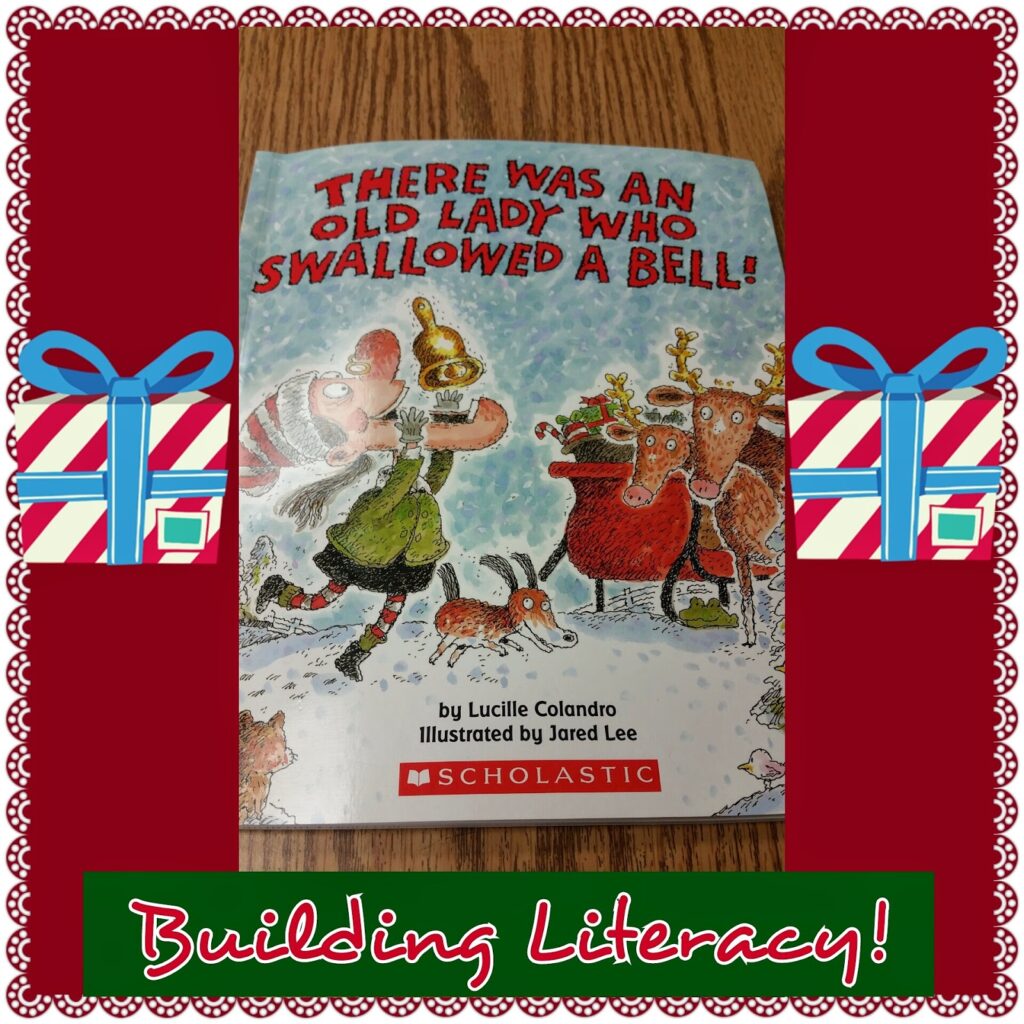
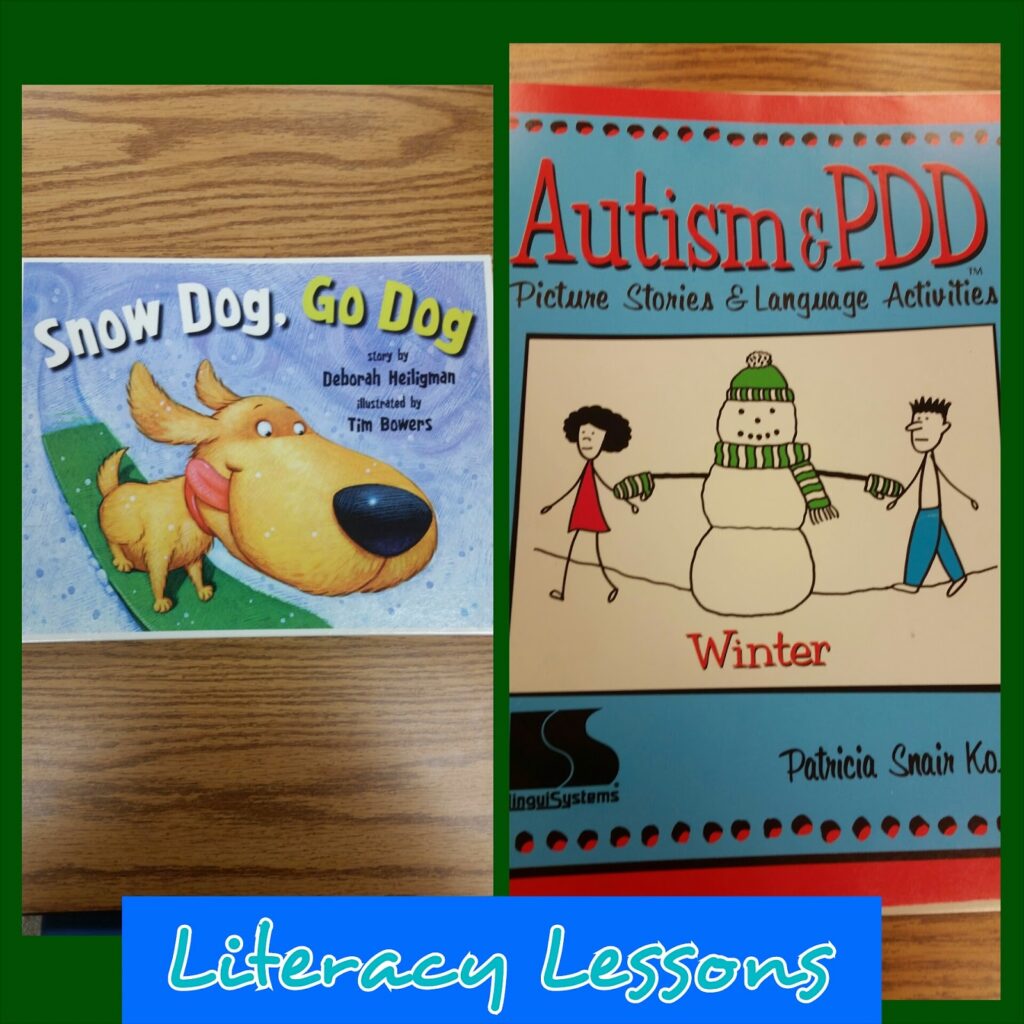
I have been doing lots of winter themed activities to keep my students’ interest and of course to provide their necessary speech/language interventions. This week, I read aloud, There was an Old Lady Who Swallowed a Bell, Snow Dog Go Dog, and Matt & Molly snowman story with various groups.
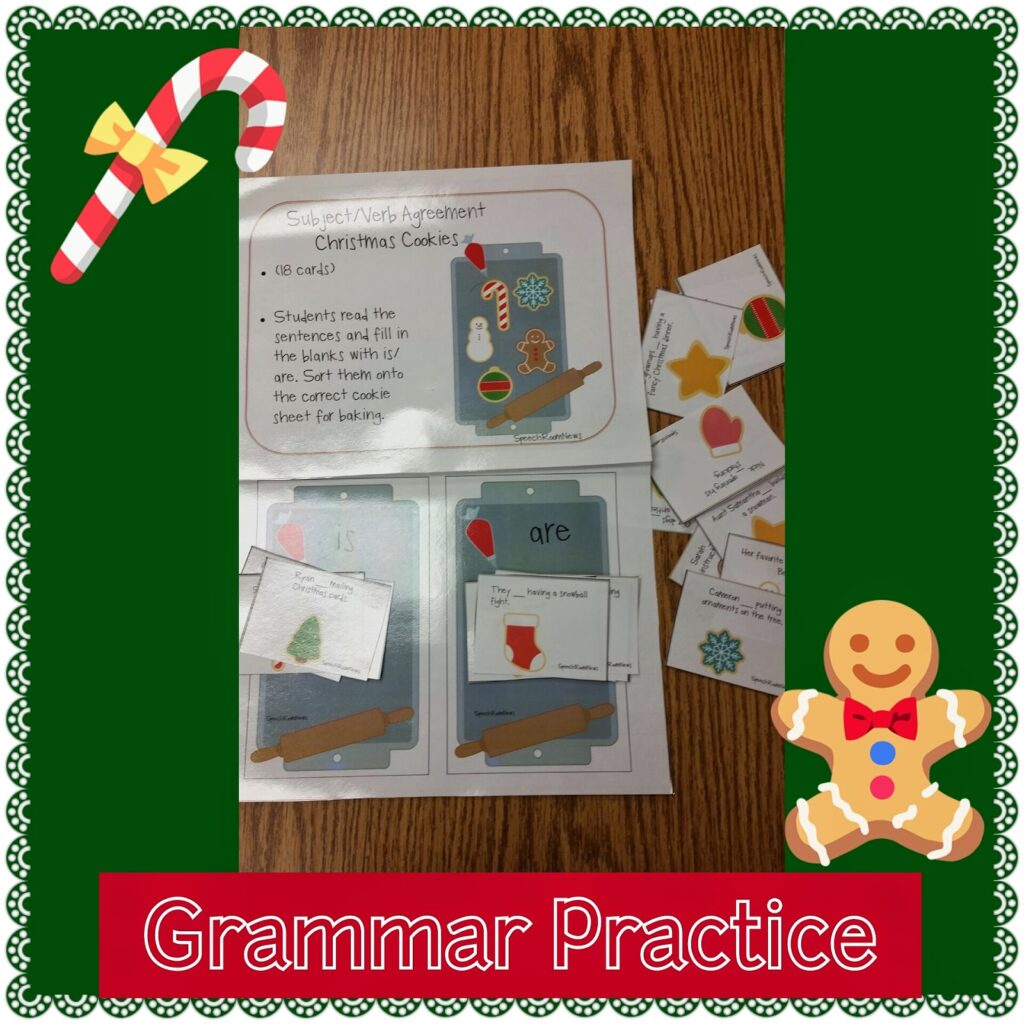
My students also practiced oral language skills with correct subject/verb agreement. I also used lots of activities to build their receptive grammar knowledge such as is/are sorting with fill-in-the blank sentences.
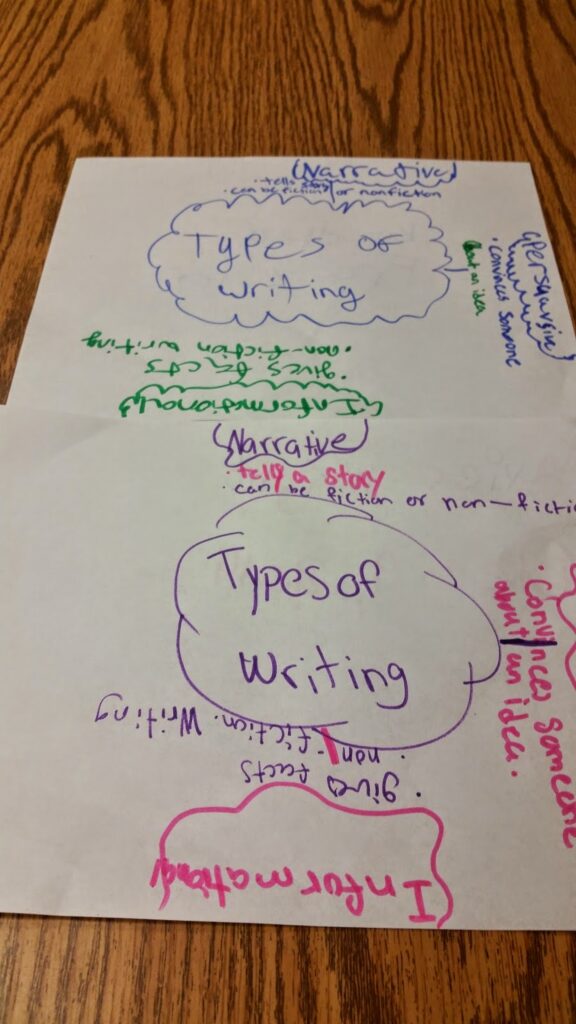
My 5th grade students practiced Tier II vocabulary by using context clues to figure out the meanings of words in written sentences and paragraphs. Some groups made semantic maps to review Tier III or English/Language Arts vocabulary by making semantic maps. For example, a few of them were struggling with remembering the differences between the types of writing so I modeled how to make a semantic map for these key words. Making and using semantic maps to recall content is an evidence based strategy to improve comprehension of vocabulary and key ideas.
Always remember that as SLPs, we frequently make adjustments in our intervention approaches and activities based on the responses of our students. So its always great to have a few resources available each session that you can use to instruct students and to switch it up as needed.
Get your time-saving resources:
www.teacherspayteachers.com/Store/Tamara-Anderson
Tamara
TPT Cyber Sale!!!
Hey everyone. I hope you all had a great Thanksgiving holiday. The past 2 days have been super busy at work. I feel like it should be Friday already! Yikes!
I bought some great speech-language therapy products during the TPT Cyber Sale today such as:
Nicole Allison’s Leveled Vocabulary Intervention

Jenn Alcorn’s Book Companions


Lauren LaCour’s Fluency Treatment Packet

Maureen’s (The Speech Bubble’s) Can You See It My Way activity to address pragmatic language/perspective taking.

I have several products that you definitely need in your speech-language sessions as well to make your life much easier. I highly recommend my Vocabulary Progress Monitoring Tool. This assesses 300 vocabulary terms according to a semantic processing hierarchy.

My Speech Progress Monitoring will help you quickly and easily take data on speech fluency and speech intelligibility.

You definitely need to purchase my English/Language Arts Comprehensive Categorization Bundle. This is a perfect intervention packet for students in grades 1-5 and even middle school to work on classifying Tier III English/Language Arts vocabulary. There are 5 activities included in this great resource! Each item is available separately in my store if you prefer just 1 or 2 items.


Here is the direct link to my store: http://www.teacherspayteachers.com/Store/Tamara-Anderson Remember to use the code: TPTCYBER to receive the full discount of 28 % off!
Happy Shopping! Check out the links on Jenna’s blog at Speech Room News for other great products.
http://thespeechroomnews.com/2014/11/whats-in-your-cart-linky-party-3.html

Tamara Anderson
SLPs Build Successful Lives! ASHA Bound!

I am so excited for this week. I have a 2 day work week and then I am off to Orlando, FL (my home state) for ASHA Conference!!! Then I will attend a wedding and have a week of Thanksgiving BREAK!! 🙂


Keep scrolling down to read my previous 2 entries to enter the giveaway for progress monitoring tools. The winners will be announced on Thursday! 🙂

Speech Progress Monitoring {Product Launch & Giveaway}
Over the years, I have provided speech therapy for several preschool to middle school age children who stutter. I know how valuable it is to have a way to quickly take data on the frequency of a child’s dysfluent episodes, types of stuttering, stuttering severity, and secondary behaviors during therapy sessions. That’s why I am thrilled to share with you what has helped make my fluency intervention sessions a breeze!!

My latest product, Speech Progress Monitoring, was released last week in my TPT online store. It includes my speech fluency data collection tool that is perfect for progress monitoring in the speech room, general education classroom, or home environment. On the form, the SLP should record the setting the speech sample is taken, type of sample (e.g. picture description, story retell, conversation) and write tally marks to indicate each spoken syllable. Under each tally mark for a dysfluent episode, use the provided acronyms to record the types of stuttering. The formula to calculate the percentage of stuttering or severity is included. As a bonus, the SLP can circle if any secondary behaviors were observed during the speech sample. Using this form, will improve your ability to write fluency objectives such as the child naming the types of stuttering and reducing the percentage of stuttering in different speaking situations using fluency strategies.
In speech therapy, there is a definite need to also have a speech intelligibility data collection tool. The progress monitoring form that I created provides a quick and easy way to calculate the percentage of speech intelligibility for children. I currently use this tool for children on my caseload with moderate intellectual disabilities. Many of these children struggle with speech articulation at the word, sentence, and conversational levels as well as with their communication partners understanding their speech. With direct intervention, the SLP can facilitate improving the speech intelligibility or the level that their speech is understood by familiar and unfamiliar speakers. This tool is essential for all speech language pathologists addressing increasing speech intelligibility with kids on their caseload.
So head over to my TPT store to purchase this awesome resource at an incredible price!
Enter here for a chance to win 2 of my latest progress monitoring tools in honor of ASHA in Florida! The winners will be notified next Thursday! :a Rafflecopter giveaway
Tamara Anderson
BSL Speech & Language
Vocabulary Progress Monitoring {Product Launch & Giveaway}
I am excited that my latest product, Vocabulary Progress Monitoring, is available for use by speech-language pathologists and can be purchased in my TPT store. This essential and effective informal assessment tool assesses 300 vocabulary words.
http://www.teacherspayteachers.com/Product/Vocabulary-Progress-Monitoring-1520541
I have personally used these quick evaluation tools with children who have speech-language disorders to measure their semantic processing skills. Several SLPs purchased this product last week during my November 7th Must Have sale so I know this is a necessary product to have handy in your speech-language therapy room.
The resource is organized by vocabulary skills that require increasing receptive and expressive language abilities. In this extensive resource, you will receive vocabulary progress monitoring documentation forms to evaluate these specific semantic skills:
1) Object functions- 20 words (school & home items)
2) Word associations- 40 words
3) Categories- 10 groups
4) Similarities/Differences- 10 words
5) Synonyms/Antonyms- 40 synonyms, 40 antonyms
6) Multiple meaning words- 90 words
7) Oral definitions with Tier I words- 10 words
8) Oral definitions with Tier III (academic) words- 20
9) Figurative language- 20 words
I recommend making an assessment binder with several copies of each form and keeping them in sheet protectors. This way you can easily access them when you need to complete an informal vocabulary assessment for a student.
This must have progress monitoring tool is on sale now in my TPT store for one week only because I know how much you need this product! As a special gift to my blog readers, enter now for a chance to win my 2 latest progress monitoring tools! The winners will be notified next Thursday in honor of ASHA in Florida! a Rafflecopter giveaway
Thanks for visiting the blog today.
Tamara Anderson
BSL Speech & Language
Literacy Website Review # 4 {Fry Sight Words}
Many students with language disorders have co-occurring learning disabilities in the areas of reading and writing. They need direct intervention to increase their reading decoding, sight word recognition, reading fluency, and reading comprehension.

Students need practice to improve their automaticity for oral reading of sight words. Recently, I have been thinking of ways to support the special education teachers’ goal of improving the reading skills of students with reading disabilities and language disorders. Sometimes the progress is slower than we would anticipate and we are eager to close the gap when the kids are reading several grade levels behind. We discussed that the students really need to improve their sight word recognition of Fry words. Research shows that students need to read the first 300 by 3rd grade and 1000 words in 4th and 5th grade to successfully read on grade level.
I was going to make flash cards for students to take home for practice and then I stumbled across the website: http://www.uniqueteachingresources.com/Fry-1000-Instant-Words.html
The Unique Teaching Resources website is awesome because it has the Fry words flashcards for 1000 high frequency words already created! Plus, there are progress monitoring checklists for all the words. I especially like that the words are divided into sets of 10 and 20 words based on the needs of students that you are working with.
This is an excellent resource to share with parents for them to encourage their kids to practice their sight words. If you have a literacy night at your school, this is a great website to share with parents and staff to access the FREE and beneficial resources!
An added bonus on this website is that it includes 100 nouns with pictures. This is great to use with language disordered kids who are building their receptive and expressive vocabulary skills.
In a special education classroom, students sometimes practice their sight words online via a power point presentation of words. However, I think is important for them to also have access to practice their sight words with flash cards when they are on the go. They can practice reading on the bus, in the car, at home easily without having to turn on a computer. Yes I do love technology. However, I also believe back to the basics instruction is needed as well.
Students in K-2nd generally practice their sight words with hands on flash cards or other word work activities when they are learning to read. What about students in grades 3-5 or even middle and high school who are reading below grade level? They still need intervention to improve their sight word recognition and reading decoding even though they are expected at that level to read to learn. But what happens when they still need to learn sight words? Special education teachers need to make remediating this area a priority and not just teach comprehension strategies and the grade level standards despite time constraints. Yes, kids need to learning comprehension strategies but they must learn sight word and how to decode words too!
This educational literacy website is created by a teacher for other educators and it is definitely jam packed with great FREE literacy resources along with some lesson plans available for purchase.
The website does not directly share other ideas for students to learn sight words other than flash cards. However, they can play games such as BINGO, Go Fish, and Memory to practice this skill. Dr. Edward Fry’s book is the perfect resource for this.
(Dr. Fry’s 1000 Instant Words: The Most Common Words for Teaching Reading, Writing, & Spelling). You can view a preview here:books.google.com/books?isbn=1576907570
Here is a great website if you would like to see the Fry word lists as related to the Common Core Standards for K-5th grade. http://www.k12reader.com/subject/vocabulary/fry-words/
I like that the K12 reader website reminds you to have students practice their reading sight words in contexts of sentences, paragraphs, and writing the words as well.
Thanks for reading the blog today!
* Tamara Anderson
BSL Speech & Language
Literacy Review # 3 { Technology }
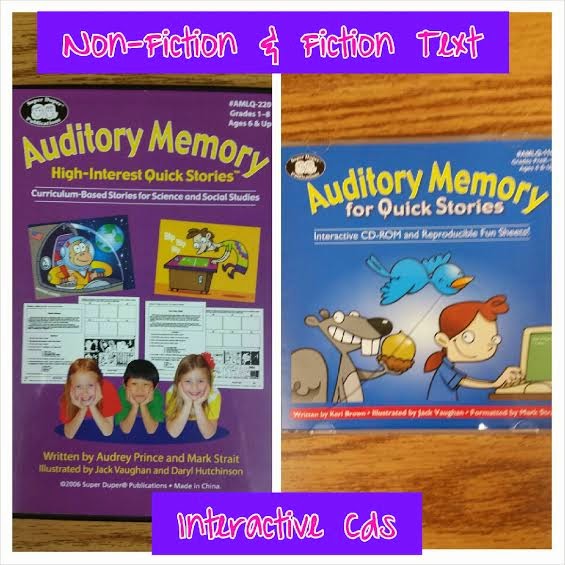
This week, I have been integrating technology based literacy activities in pediatric speech-language group therapy sessions. So many kids with receptive language disorders need to improve their listening comprehension skills when read fiction and non-fiction text. That is why I love the 2 products from Super Duper Publications, Auditory Memory for Quick Stories (fiction text) and Auditory Memory High-Interest Quick Stories, Curriculum-Based Stories for Science and Social Studies (non-fiction text). There are 30 fiction stories and 30 non-fiction stories. I purchased these about 3 years ago and I am so glad that I did!

http://www.superduperinc.com/products/view.aspx?pid=AMLQ110&stid=
http://www.superduperinc.com/products/view.aspx?pid=AMLQ220&stid=#.VEmlm_ldWSo
Using these resources allows the SLP or classroom teacher to differentiate instruction by content or what the child needs to learn. The SLP may vary her delivery of services by providing individualized instruction to a student on a specific learning objective (e.g. multiple meaning words) while other students practice their listening comprehension skills using these literacy technology resources.
These Cds also have built in capabilities for differentiated instruction based on the process because there are leveled settings available that the SLP or teacher can select based on a child’s current literacy abilities. For example, on level 1, a child is presented with a question after each picture. The levels increase by providing more auditory information and visual pictures before the next set of comprehension questions. The 4th and highest level is strictly auditory and requires keen listening for details from stories.
I love this product because it provides children an opportunity to improve their memory skills and language comprehension. It also helps foster a love of literacy. This is a definite win for the SLP and teacher because this program tracks data according to percentages from each story. I recommend printing the scores regularly to ensure that you maintain meticulous therapy data or work samples for your classroom.
Have you used this resource before? What are your thoughts?
Tamara Anderson
BSL Speech & Language
October Children’s Literature Reviews
Here are my children’s literature reviews for books to use during the month of October. The first two books are ideal for addressing listening comprehension and vocabulary skills with children who are learning everyday Tier I words.

Here’s a snapshot from one of my favorite pages:


Language Processing Treatment Plan {Evidence Based }
The majority of children on my caseload have a mixed receptive and expressive language disorder. They struggle with both language comprehension and oral expression. They also have language based learning disabilities with challenges in reading and written expression. In order to remediate their difficulties, it is important to remember the hierarchy of language processing skills that will enable children to be more successful communicators and learners.
I love the Language Processing Test Elementary by Gail Richard and Mary Anne Hanner. http://www.linguisystems.com/products/product/display?itemid=10360
There is also an accompanying intervention book that describes the importance of providing speech language therapy services according to the following hierarchy. As a SLP, you can determine a child’s language strengths and areas of need. Then you can provide direct instruction in those areas. Remember that these skills require increasing linguistic demand or receptive/expressive language abilities.
1) Labeling
2) Functions
3) Associations
4) Categories
5) Antonyms
6) Synonyms
7) Similarities
8) Differences
9) Multiple meaning words
10) Oral definitions with attributes (*This corresponds with the assessment subtest. However, the treatment book includes practice with idioms and analogies instead of attributes.)
http://www.linguisystems.com/products/product/display?itemid=10438
Although I have not yet used the specific activities in this book, I have provided direct speech-language therapy on these specific language areas of need for years. It is important to remember this hierarchy when writing speech-language goals & objectives for children and providing therapy services. Each language area requires knowledge and expressive communication abilities of the previous language skill.
So many students with co-occurring disorders struggle with these concepts. Students may have an identified speech-language impairment (SLI) along with specific learning disability(SLD), SLI with Autism Spectrum Disorder (ASD), SLI with Moderate Intellectual Disability (MOID), SLI with Mild Intellectual Disability (MID), SLI with Attention Deficit Disorder/Attention Deficit Hyperactivity Disorder (ADD/ADHD), or SLI with Deaf/Hard of Hearing (D/HH). Regardless of these “labels” or classifications, speech-language pathologists have the important professional task of remediating the language processing skills listed above as appropriate for each child.
I have several speech-language therapy activities that address these skills in my TPT online store. Head over to my store and add them to your SLP time saving and effective resources.
www.teacherspayteachers.com/Store/Tamara-Anderson
Thanks for reading the blog today!
Tamara Anderson

I love Semantic Maps! {Evidence-Based Strategy}
I love any reason to use markers in speech-language therapy sessions with my students. When I demonstrate how to make semantic maps, I naturally use markers to make the terms more appealing. Who doesn’t like colorful work samples anyhow? Plus, it is a great memory aid as well.
Semantic maps are visual representations of key vocabulary words that are accompanied by definitions, pictures, and/or acronyms to help individuals learn academic content.

I provide speech-language therapy to kindergarten-fifth grade students. Typically, I use this evidence based strategy with my 5th grade students with science and social studies content. However, it is beneficial with younger kids as well.
Last year I implemented a single subject research design study for my Ed.S. degree program in curriculum & instruction. I compared 5th grade students’ receptive social studies vocabulary knowledge after instruction using semantic maps with World War I and World War II terms vs. the intervention method of flash card drill & repetition. Making semantic or metacognitive maps were a part of Dr. Caroline Leaf ‘s, The Switch On Your Brain 5-Step Learning Process system that I implemented during this research. She is a neuroscientist and speech-language pathologist. How cool is that! I met her in person two years at a conference and she is a phenomenal speaker!
http://drleaf.com/store/the-switch-on-your-brain-5-step-learning-process-dvdworkbook/
Ok, back to semantic maps. My research findings revealed that the use of the semantic map strategy increased the receptive vocabulary knowledge of 5th grade speech-language impaired students at a greater rate than vocabulary instruction using the flash cards method. On average, my students made a 35 % gain from pretest to posttest with WW I terms and a 50 % gain with WW II terms using semantic maps as a vocabulary learning strategy. When they used the flash card method during the non-treatment phase they demonstrated a 11% increase with WWI terms and a 15 % increase with WWII terms.
This year, I have reviewed key ideas about the Civil War, reconstruction, westward expansion, animal cells, and plant cells using semantic maps with my students who have language disorders and co-occurring language based learning disabilities.
Thanks for reading my blog today! 🙂
*Remember to follow me on Instagram, Twitter, and Facebook for regular updates as well! I appreciate your support of Building Successful Lives (BSL) Speech & Language.
Tamara Anderson
