

Learning Disorders {Parent Resources}
There are many children and adolescents that have learning disorders. Their challenges may impact their ability with language processing, reading, writing, and math. Learning disabilities is another term that is synonymous with learning disorders. According to the National Center of Learning Disabilities “LD is more than a difference or difficulty with learning-it’s a neurological disorder that affects the brain’s ability to receive, process, store, and respond to information.”
Many students with receptive (listening comprehension) and expressive (oral) language disorders are also diagnosed with a co-occuring language based learning disability in the school setting. Why? A child’s ability to listen, comprehend, and explain information directly relates to their ability to read and write. Literacy skills of listening, speaking, reading, and writing are all interrelated skills.
In the area of reading, a child may have difficulty decoding or sounding out words, reading fluently, and/or understanding what they read. This contributes to a child reading below grade level in elementary, middle, high school, and beyond. Therefore, it is critical that children with reading disorders are identified quickly and receive intensive intervention from a reading specialist or special education teacher. Dyslexia is a term used frequently by professionals to describe students with reading disorders. However, not all children with reading difficulties have dyslexia.
In the area of math, students who struggle with reading will have difficulty understanding and solving math word problems and other reasoning tasks. A child may also have dyscalculia or difficulty learning math concepts. A child may struggle with recognizing numbers and symbols, learning and remembering math facts, or difficulty coming up with a plan to solve math word problems. The NCLD gives a more in depth description of dyscalculia here: http://ncld.org/types-learning-disabilities/dyscalculia/understanding-dyscalculia?start=1#FOUR
The National Center for Learning Disability provides a great breakdown of the differences between dyslexia, dyscalculia, and dysgraphia (written expression difficulties).
Here are some warning signs for dysgraphia courtesy of NCLD:
Just having bad handwriting doesn’t mean a person has dysgraphia. This is a processing disorder that may change throughout a person’s lifetime. Writing is a developmental process. Children learn the motor skills necessary to write while they learn the thinking and expressive language skills to communicate their ideas on paper.
Dygraphia: Warning Signs by Age
Young ChildrenTrouble With:
|
School-Age ChildrenTrouble With:
|
Teenagers and AdultsTrouble With:
|
Reference: http://www.ncld.org/
Although this blog is geared towards pediatric communication and learning disorders, it is important to know that some adults continue to demonstrate characteristics of learning disorders. However, they can lead successful lives once they learn strategies to overcome their difficulties.
Developmental Disorders {Parent Resources}
Developmental disorders are also commonly known as neurodevelopmental disorders because they are a group of conditions that results from impairments in the brain or central nervous system that often begin at birth and continue as a child grows. These disorders negatively impact cognition, communication, motor, social/emotional, learning, and memory skills. These include a range of conditions from speech-language impairments, intellectual impairments, cerebral palsy, attention deficit disorder, autism, and challenges with executive functioning (e.g. problem solving/organization).
Some of these disorders are due to genetic abnormalities such as Down syndrome and Fragile X syndrome while others are due to toxic environmental factors such as Fetal Alcohol Syndrome.
The prevalence of Autism Spectrum Disorder is on the rise as this has become a very common neurodevelopmental disorder. Current research is not conclusive as to the reason for the increase in the amount of cases of this disorder. Nevertheless, in March of 2014, The Center for Disease Control (CDC) in Atlanta, Georgia confirmed that 1 in 68 children have been identified with autism spectrum disorder (ASD) and the occurrence is higher in boys (1 in 42) than girls (1 in 189). The CDC also reports that 1 in 6 children in the U.S. have a developmental disorder.
Those statistics are quite alarming! So, what is a solution? Early intervention and continued intervention from a variety of allied health professionals are necessary to optimize each child’s opportunity to learn and grow. These children and families need a committed team of caring pediatricians, speech-language pathologists, occupational therapists, physical therapists, nutritionists, etc. that will teach the tools the children need in life.
A child may have more than one disorder such as a communication disorder, learning disorder, and attention deficit disorder (ADD). In the school setting, the child’s special education teacher, speech-language pathologist, psychologist, and parents work together to evaluate and develop an Individualized Education Plan (IEP) to address specific areas of need that are having a negative impact on the child’s academic and social success at school. In doing so, a child with a developmental disorder can gain access to achieve gains where they demonstrate challenges.
References:
http://dsm.psychiatryonline.org/content.aspx?bookid=556§ionid=41101757
http://www.apadivisions.org/division-16/publications/newsletters/school-psychologist/2012/04/neurodevelopmental-disorder-implications.aspx
http://aadmd.org/articles/causes-complications-and-consequences-neurodevelopmental-disorders
Developmental Milestones {Parent Resources}
Developmental milestones are the specific skills related to communication, fine motor, gross motor, cognitive (e.g. thinking), and self help (e.g. feeding/dressing) that children acquire as they grow and learn. A child’s genetics and environment will play a role in the rate and extent of a child’s development. Early intervention is critical if a parent or caregiver notices that certain skills are not present by a certain age. However, these milestones are a guideline and does not confirm that your child has a speech-language disorder if a skill is not yet developed. The American Speech-Language Hearing Association provides an excellent overview of typical speech-language development for children from birth-age 5:
What should my child be able to do?
| Hearing and Understanding | Talking |
|---|---|
|
Birth–3 Months
|
Birth–3 Months
|
|
4–6 Months
|
4–6 Months
|
|
7 Months–1 Year
|
7 Months–1 Year
|
1 year- 2 years of age
| Hearing and Understanding | Talking |
|---|---|
|
|
2 years-3 years of age
| Hearing and Understanding | Talking |
|---|---|
|
|
3 years – 4 years of age
| Hearing and Understanding | Talking |
|---|---|
|
|
4 years- 5 years of age
| Hearing and Understanding | Talking |
|---|---|
|
|
For more information about children’s typical speech-language development during elementary school age, check out this link:
http://www.asha.org/public/speech/development/communicationdevelopment/
For more information about children’s typical motor, social-emotional, sensory, and cognitive thinking skills see information provided by the American Academy of Pediatrics :
http://www.healthychildren.org/English/ages-stages/baby/Pages/default.aspx

Driven by Innovation
On Sunday, I went to one of my favorite places in Atlanta, The High Museum. In fact, I love it so much I have an annual membership that I purchased for a steal back in September! The museum’s latest major exhibition is Dream Cars that features unique and imaginative cars that were designed in the 1930s through the present by Ferrari, Buggatti, General Motors, and Porsche. These automakers designed cars that changed the industry by challenging what was possible both technologically and stylistically.
Here are a few photos from my visit.


This made me think about the field of speech-language pathology and education. What are these industries doing to challenge the notion of what is possible for students’ communication and academic successes? What are speech-language pathologists and educators doing to modify how they assess students and implement therapy sessions and instruction? In recent years, I think SLPs and educators have done and continue to do a TREMENDOUS amount of preparation to select evidence based materials, evaluate what children already know, teach, and evaluate again to see what children learned.
Common Core Standards and differentiated instruction are terms that I hear frequently while working as a school based speech-language pathologist. There are many people on both the pros and cons side of the Common Core Standards discussion and I’ll spare you the debate here. However, I like the accountability piece that the common core standards creates for school districts that use these standards to guide instruction.
In the same manner, I believe that differentiated instruction, in which a teacher modifies how they teach, what they teach, and how they assess children is an essential shift in the style from traditional teaching. I also think that it should be best practice for all educators to implement curriculum design based on Grant Wiggins’ notion of creating a solid assessment before instructing students so that you know clearly what and how you expect them to demonstrate mastery of specific learning standards.
As far as technology goes, there has been a significant increase in the amount of technology that SLPs and educators use to select lessons that drive children’s learning while implementing new techniques that assist in delivering results. The use of interactive SMART boards, IPads, Mimio Boards, and computer based therapeutic/educational program are engaging for children and contribute to learning when implemented effectively. Additionally, teachers and SLPs are able to collaborate with other professionals not only at their school, but also nationwide and globally through the use of online blogs, discussion boards, Twitter, Pinterest, and other forms of social media. Children and adolescents in today’s society are very technologically savvy and I have observed that they love creative and innovative lessons rather than the same old therapy and education styles from even 5 to 10 years ago.
What are ways that you implement creativity and innovation in your speech language therapy sessions or classroom? I’d love to hear!
Tamara Anderson, Ed.S., CCC-SLP
Speech-Language Pathologist
Education Specialist
Writer

Build Successful Lives- The Gift of Hearing
Yesterday, I heard about a toddler from Dallas, Texas who recently had a cochlear implant
surgically placed. Izzy Baker was born with a severe hearing loss that led
to her challenges with communication. She currently communicates with sign
language. A friend of mine shared this
video story with me after it was shown on NBC in my hometown of Miami, FL. It was
a short segment, but it was definitely one of those feel good stories. You know the ones that just pull at your heart strings.

amazing to see this precious little girl receive the gift of hearing as the
audiologist (hearing specialist) activated the sound processor behind her ear
for the first time. The little girl’s face lit up in amazement and she also smiled
and pointed to her ear as the audiologist turned on the beeps to test her
ability to hear. This sound processor looks like an external hearing aid and transmits
a signal to the cochlear implant that stimulates the
auditory nerve in the inner ear and allows Izzy to hear.
has received this gift of hearing, she will receive follow up care from a team
of professionals to ensure that she receives the greatest benefit from her
cochlear implant. The audiologist will make sure the device is programmed and
fitted effectively, the speech-language pathologist will teach her to
communicate orally and/or with sign language, and her parents will carry out
instructions given by the team of hearing professionals.
video clip: http://www.nbcmiami.com/news/national-international/Dallas-Toddler-Hears-for-the-First-Time-266041791.html?_osource=SocialFlowFB_MIBrand
I hope this
story made you smile! Have a great day. Remember to do what you can to build
successful lives through service to others! This little girl now has access to hear and communicate in
new ways that would not have been possible without her cochlear implant,
family, and team of hearing professionals!


It Takes A Village!

When I woke up this morning, I was so excited thinking about all that I wanted to share with you all today. There were so many things that flooded my mind. Do you know what stuck out the most? I kept saying it over and over. Do you know what it is? I am sure you guessed it by now. It Takes A Village!
It really does especially when working with children, adolescents, and often adults with special needs. This is why I work primarily as a school based speech language pathologist so that I may have the pleasure of making an influence in the lives of children with communication and learning challenges. Developing effective communication skills is the foundation of a child’s learning and social interactions with his or her family, friends, teachers, and people in the community. Many children naturally learn to communicate, but children with developmental delays and neurological impairments need direct intervention services from a speech language pathologist to gain these skills.
The village is a community that builds successful lives. For a child with special needs, it includes the child, parents, speech-language pathologist, physical therapist, occupational therapist, pediatrician, psychologist, teacher, administrator, friends, family, and other community workers that interact with each other for a shared purpose of positively influencing the life of a child.
I am glad that you are taking the time to read this blog today and I challenge you to join this community. Stay connected with this blog and you will receive valuable information about assisting children with communication disorders, learning disabilities, and students without learning challenges. Even if you don’t work directly with children, you most likely will read something that will be beneficial in caring for your own children or that you can share with a family member or friend. Remember, It Takes a Village!

You don’t want to miss this opportunity to learn about educational/therapy resources for children and take part in something BIG! It Takes a Village to positively influence the life of a child starting with the day he or she is born and continuing as he or she begins elementary school, graduates from high school, decides on a college/career path, and enters the work force.
Thanks for visiting today. See you next time. Stay connected! Just click on the social media circular buttons at the top of the blog or the links below.
Facebook: https://www.facebook.com/BSLSpeechLanguage?ref=bookmarks
Bloglovin’:http://www.bloglovin.com/en/blog/6673025
Linked in: https://www.linkedin.com/profile/view?id=18301838&trk=spm_pic
Pinterest:http://www.pinterest.com/unctams/
TPT: http://www.teacherspayteachers.com/Store/Tamara-Anderson
Email: Subscribe by entering your email at the top right of the blog and receive new blog posts automatically.
Have a wonderful day!

Tamara Anderson, Ed.S., CCC-SLP
Speech-Language Pathologist
Education Specialist
Writer
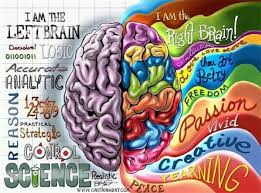
Learning Styles Myth or Fact: Right Brain vs. Left Brain
While chatting with a friend recently, she asked me if I had recommendations for learning strategies to help her god daughter in school because she is a “right brain learner.” She explained that she tends to do well when she uses visual aids and wanted to know if I had any video resources that I could send them. I told her that I would be happy to share some information with them.
people have different cognitive strengths and contrasting cognitive styles. This theory proposed that there are seven types of intelligences that are of equal importance and include: linguistic, logical-mathematical, spatial, musical, bodily/kinesthetic, interpersonal, and intrapersonal.
with students who perform best when they are allowed to practice specific
skills through oral language practice (interpersonal/intrapersonal
intelligence), using visual cues/organizers (spatial intelligence), and with hands on activities (kinesthetic intelligence). Because the students I work with have
language based learning disabilities, their linguistic intelligence (e.g. reading/writing) is often their weakest skills. Therefore, these students have to use their other
strengths or intelligences to learn new skills.Many students who identify with being “right-brain learners” may benefit from the use of pictures, integrating singing academic lyrics, playing background music, or participating in kinesthetic/hands on activities to learn a particular skill.
The bottom line is that students often learn best when they are exposed to more than one learning style to encode the information into their brain. When this is done, they effectively transfer the information into short term memory and then long term memory. Although people may have their own preferences for learning, both sides of the brain work together to effectively process and learn new information.
learning styles, brain-based learning, and specific resources that can help all students learn.
References:
Brain-based learning. The new science of teaching & training. San Diego,
CA: The Brain Store Publishing.
switch on your brain 5 step learning process. Dallas, TX: Switch On Your Brain USA.
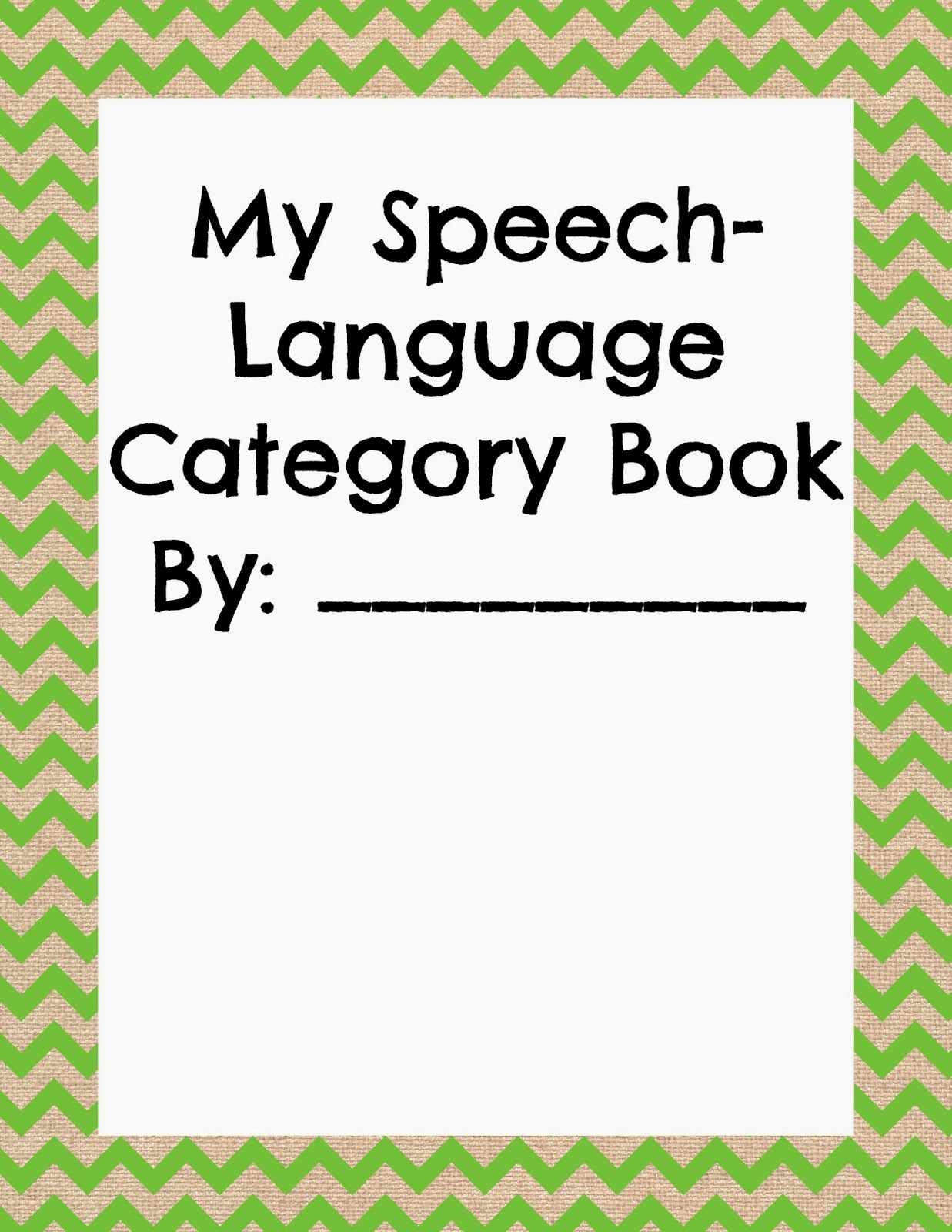
Categorization Bundle Activity # 5: Speech-Language and Language Arts Category Book
Here is a preview of the last activity in my English/Language Arts Comprehensive Categorization packet. This resource is perfect for use by speech-language pathologists or teachers to instruct students on English/Language Arts Common Core Standards vocabulary words. The category book is designed for use with students in grades 3-5. However, this is also a good review for 6th grade students in middle school.
I suggest laminating a copy of the book to use during whole group instruction and attaching velcro to affix words in the correct categories. The SLP or teacher should first complete a mini lesson by explaining the meanings of the category names and providing examples. Then the teacher should show students how to classify the terms into the different categories in the book. After the students understand the instructions, the SLP or teacher may distribute the individual book seen below for them to complete individually or with assistance. Depending on the students’ language processing skills, this activity may need to be addressed over more than one speech language therapy session.


This book includes 11 vocabulary categories such as parts of speech, types of literature, parts of sentences, types of sentences, synonyms, antonyms, multiple meaning words, story vocabulary, figurative language, text features, and types of writing. Students need to cut out the 14 groups of vocabulary words provided and sort them in the correct groups. Three groups will need to be sorted into a previously used category. Next the SLP or teacher should check students work for accuracy and then have them glue the words in their book.
So you may think, what is the significance of teaching this skill? Students need to learn ways to effectively organize and input academic content into their brains so they can easily retrieve the information. Direct instruction in categorization will enable students with and without language disorders as well as language based learning disabilities to improve their receptive vocabulary knowledge. Additionally, this resource may contribute to improving their short term, working memory, and long term memory skills.
You may purchase this resource from my TPT store in the comprehensive bundle by clicking here:
http://www.teacherspayteachers.com/Product/ELA-Comprehensive-Categorization-Bundle-1111028
or individually:
http://www.teacherspayteachers.com/Product/Speech-Language-and-Language-Arts-Category-Book-1110677
Thanks for visiting the blog today.
Tamara Anderson, E.d.S., CCC-SLP
Speech Language Pathologist
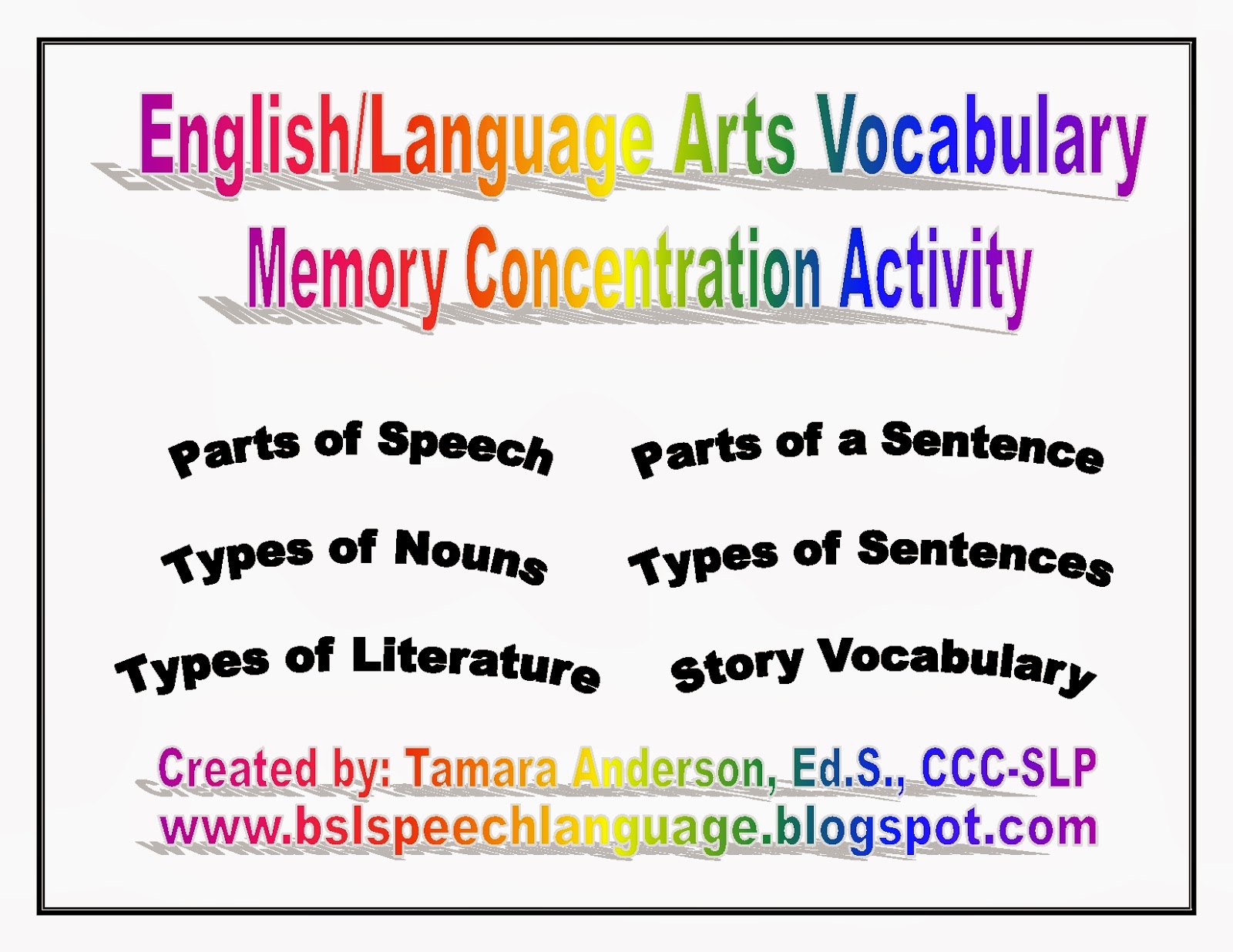
Categorization Bundle Activity # 4- English/Language Arts Vocabulary Memory Activity
Hey there. I hope everyone had a great weekend and remembered to spring forward due to the time change. As I think about the beginning of another work week tomorrow, I can’t help but reflect on my lovely students with speech language disorders. Many of them also have co-occurring specific learning disability in the area of language. Additionally, several of them struggle with remembering academic content either because they did not understand it when it was taught or their brain struggles to effectively encode the information.
I created a English/Language Arts Vocabulary Memory Activity that will give students practice with increasing their short term, working memory, long term memory, as well as their receptive academic vocabulary knowledge of common core standards related terms. Vocabulary and memory skills are essential for listening and reading comprehension as well as mastery of academic content. This is a great activity for use during speech-language therapy, Language Arts centers, or as a differentiated instruction activity. Speech-language pathologists or teachers may make multiple sets as needed for students to use during small group or independent practice. Here is a preview:


To play the memory game, students will take turns identifying matches of the English/Language Arts vocabulary according to the category and associated vocabulary listed. If playing in a group, the student gets an extra turn if he or she selects a matching pair. There are 21 matches and the player with the most matches is the winner of the game. I recommend dividing the word cards into 2 sets initially so that the students are striving to identify 10 or 11 matches.
This activity is available for purchase in my TPT store as part of my ELA Comprehensive Categorization Bundle or individually. Check out the links below to view items:
http://www.teacherspayteachers.com/Product/ELA-Comprehensive-Categorization-Bundle-1111028
I appreciate your support. Have a great week!
Tamara Anderson, M.S., CCC-SLP
Speech-Language Pathologist
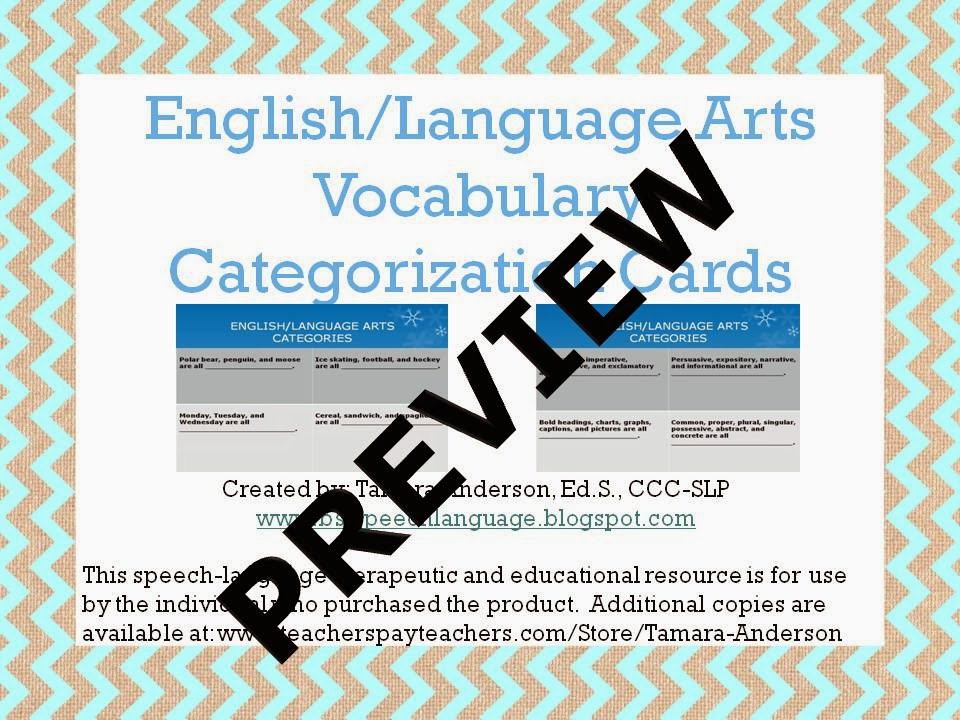
Categorization Bundle Activity # 3- English/Language Arts Vocabulary Categorization Cards
The third activity in my English/Language Arts Vocabulary Categorization bundle are task cards. There are two levels of tasks cards that cover Tier I (everyday vocabulary words) and Tier III (E/LA words). Students have to complete sentences with the correct Tier I or Tier III term. The first level targets questions for students in grades K-2 and the second level targets questions for students primarily in grades 3-5. However, I also suggest using Tier I words with upper grades students as a warm up activity prior to them learning to name vocabulary words in the Tier III English/Language Arts categories.
Over the years, I have observed first hand that students with language disorders have difficulties processing verbal/written information, organizing information, remembering content, and expressing information. When speech-language pathologists or teachers provide them direct instruction in the area of categorization, it addresses all these skills in one activity.
These categorization task cards are an ideal way to address vocabulary as well as the skills mentioned above. Here is a preview of the two levels of tasks cards provided.


This speech language therapy and educational resource is available for purchase in my TPT store. Just click on the link here:
http://www.teacherspayteachers.com/Product/EnglishLanguage-Arts-Vocabulary-Categorization-Cards-1109465
Have a great week!
Tamara Anderson, Ed.S., CCC-SLP
Speech Language Pathologist